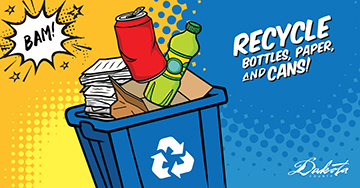
 All residents are required to recycle. Learn how to set up recycling and trash service at your home.
How to recycling right
-
Do not use plastic bags. Place recyclables loose in your recycling cart or in a paper bag.
- Empty and dry bottles, jars and containers. They don't have to be perfect — just free of most residue.
- Leave caps on containers.
- Empty and flatten boxes.
Put these items in your recycling
Paper
- Newspaper and inserts
- Magazines and catalogs
- Mail and office papers
Cardboard
- Corrugated cardboard
- Paperboard (e.g., cracker boxes)
Cartons
- Milk and juice cartons
- Soup, broth, and wine cartons
- Juice boxes
Metal cans
- Aluminum, tin, and steel cans
Glass bottles and jars
Plastic bottles, containers and jugs
- Containers numbered 1, 2 or 5
- Soda, juice and water bottles
- Milk and juice jugs
- Margarine, cottage cheese, cream cheese and other tubs and lids
- Laundry detergent bottles and jugs
- Clear berry and produce containers
NO – DO NOT put these items in your recycling
- Batteries
- Black plastic
- Ceramic dishware
- Clothing and textiles
- Food
- Household hazardous waste/hazardous waste
- Paper plates, cups, and napkins
- Diapers
- Pharmaceuticals and medicines/medical waste
- Plastic bags and film
- Metal cylinders (e.g., propane tanks)
- Scrap metal* (e.g., metal pots and pans)
- Shredded paper
- Styrofoam™
- Tanglers (e.g., chains, extension cords, hoses, string lights)
- Trash
- Yard waste and natural Christmas trees
- All items banned from being placed in the trash or recycling in state or local law – including:
- Electronics
- Major Appliances
- Sharps (e.g., lancets, needles, syringes)
- Tires
*Scrap metal is allowed in carts and dumpsters only if delivered to the Tennis Sanitation recycling facility.
Online recycling guide
Use the Recycling Guide to search any item you are not sure about.
Educational resources